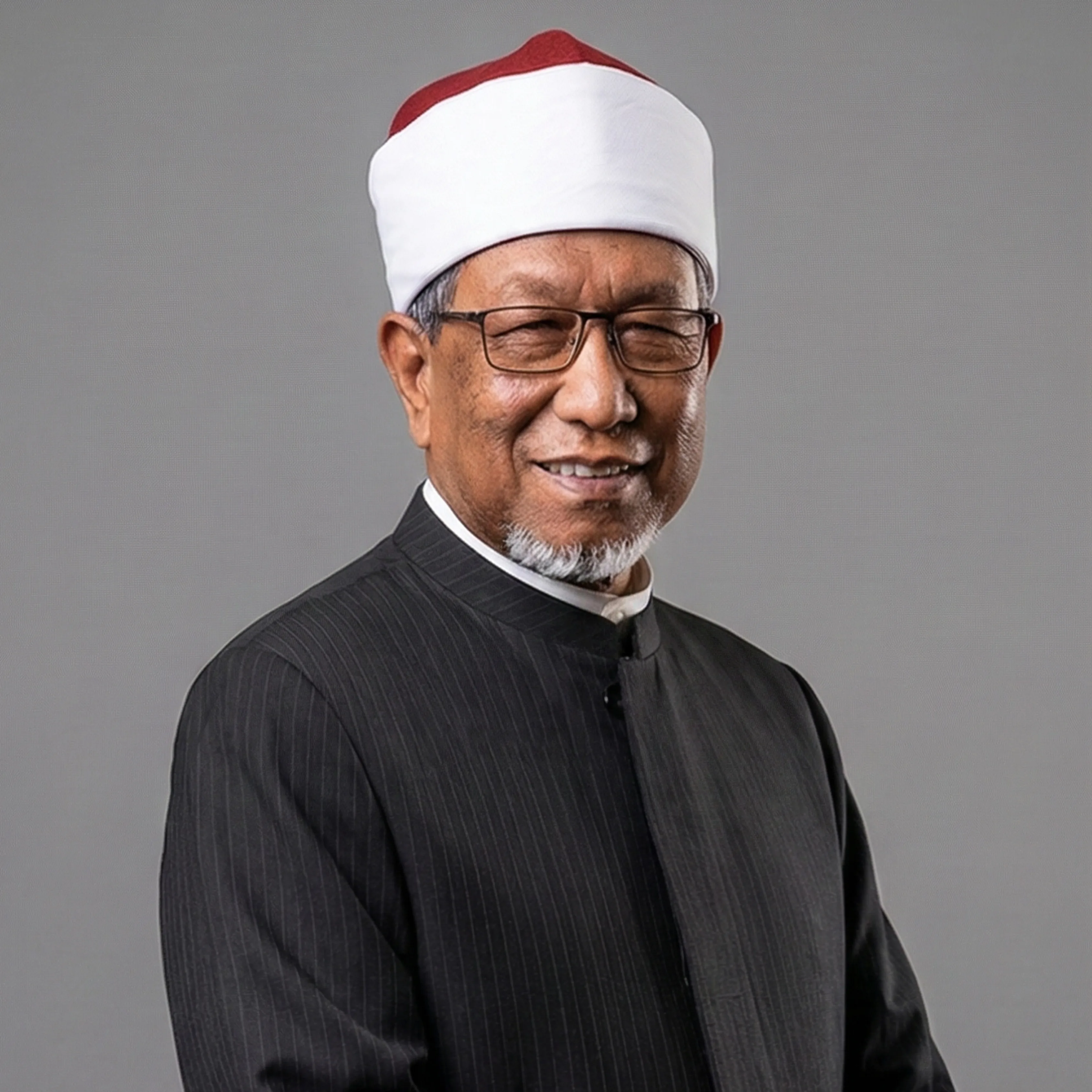
Dato' Sri Dr. Haji Abdul Rahman bin Haji Osman
Former Mufti of the State of Pahang
Dato’ Sri Dr. Haji Abdul Rahman bin Haji Osman is a distinguished Malaysian Islamic scholar who served for 16 years with dedication as the former Mufti of the State of Pahang. Renowned for his depth of knowledge in Islamic jurisprudence (fiqh), creed (ʿaqīdah), and contemporary fatwa deliberation, he played a significant role in strengthening the administration of Islamic law in the state.
Throughout his tenure, he emphasized moderation (wasatiyyah), adherence to the Ahli Sunnah wal Jamaah tradition, and the application of maqāṣid al-sharīʿah in addressing modern societal issues. Dato’ Abdul Rahman was actively involved in scholarly discourse, religious guidance, and public education, contributing to harmony between religious principles and governance. His legacy continues to influence Islamic legal thought, institutional integrity, and the development of authoritative religious guidance in Pahang.
Dato’ Sri Dr. Haji Abdul Rahman bin Haji Osman received his early religious education at Madrasah Aljunied Al-Islamiah in Singapore. He pursued higher Islamic legal studies at Universiti Al-Azhar, Cairo, Egypt, earning a Bachelor of Shariah Law (1975–1982). He further advanced his academic qualifications with a Diploma in Judiciary from IIUM and a Master’s in Counselling from Universiti Teknologi Malaysia (UTM). In recognition of his scholarly contributions, he was conferred an Honorary Doctor of Philosophy in Islamic Studies by Universiti Islam Pahang Sultan Ahmad Shah (UniPSAS).
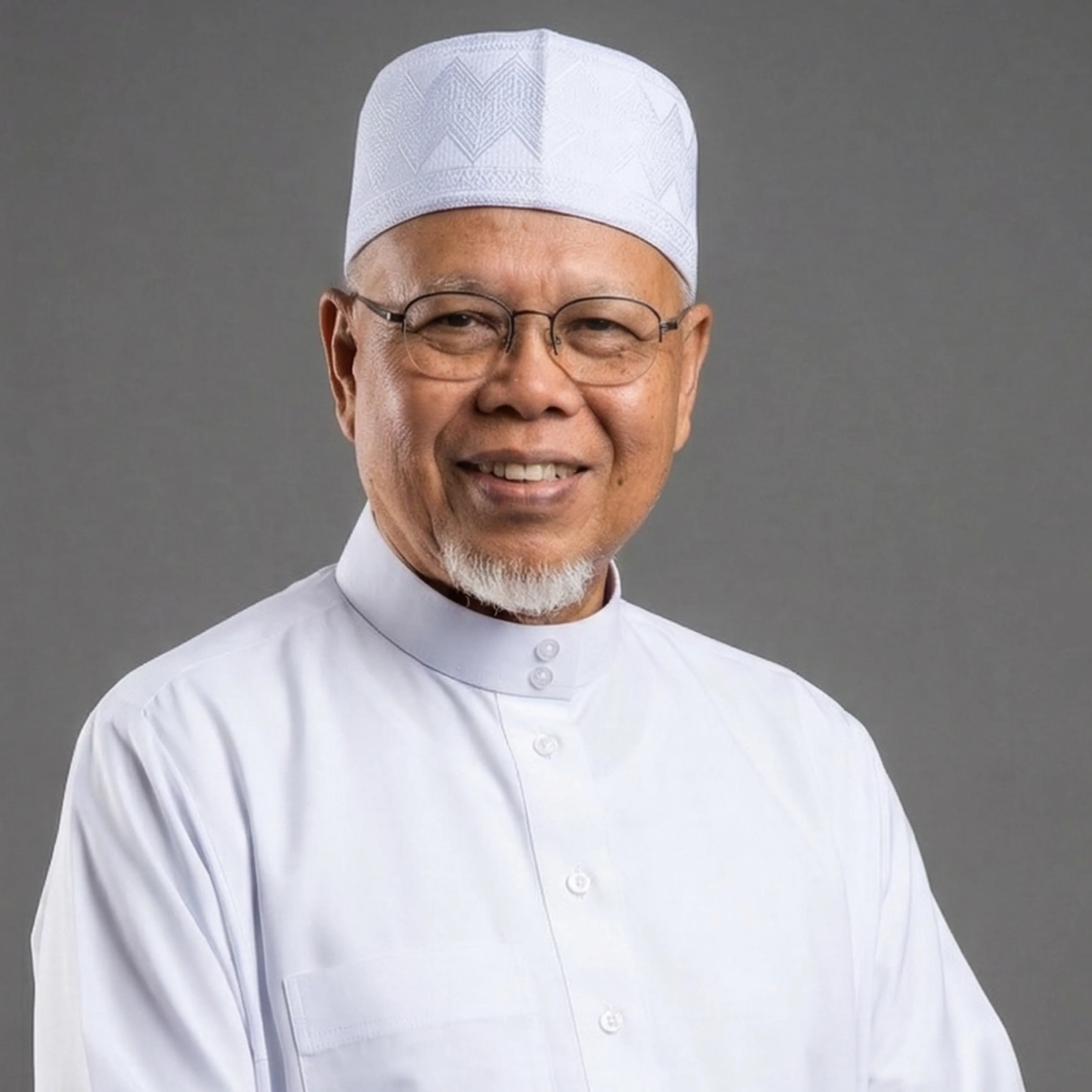
Datuk Haji Mohd Nakhaie bin Haji Ahmad
Former President of YADIM
Datuk Haji Mohd Nakhaie bin Haji Ahmad stands as a prominent figure in the landscape of Malaysian Islamic scholarship, characterized by a profound intellectual foundation and a lifelong commitment to the advancement of the Ummah. His journey into high-level Islamic discourse began in the intellectual heart of the Muslim world, where he attended the prestigious Al-Azhar University in Cairo, Egypt. At Al-Azhar, he earned his Bachelor’s degree in Usuluddin, mastering the classical foundations of Islamic faith and jurisprudence. To further refine his intellectual rigour, he pursued a Master of Arts in so called Philosophy at Cairo University, a move that allowed him to bridge the gap between traditional theological study and modern inquiry.
Upon returning to Malaysia, Datuk Nakhaie transitioned from a scholar to a strategic leader in Islamic administration and propagation. His tenure as the President of the Islamic Dakwah Foundation of Malaysia (YADIM) marked a significant era for the institution, where he prioritized the intellectualization of dakwah. Under his leadership, Islamic propagation was not merely seen as a religious duty but as an organized academic and social effort to provide the public with a moderate, balanced, and well-researched understanding of Islam. His approach helped shape how Islamic institutions in Malaysia communicate complex theological concepts to a contemporary audience.
On the international stage, Datuk Nakhaie’s expertise is recognized by the global scholarly community. He serves as Malaysia’s representative to the Muslim Council of Elders (Majlis Hukama’ Muslimin), an elite body of international scholars dedicated to promoting peace and addressing the intellectual causes of extremism. His role in this council places him at the forefront of global Islamic diplomacy, contributing to high-level discourses on Wasatiyyah (moderation) and the role of faith in fostering global harmony.
Beyond his executive roles, his contributions to Islamic thought are evidenced by his active participation in scholarly councils and his role as an advisor to various academic bodies. His appointment as an Advisor to the Baitussaadah Institute of Islamic Studies is a testament to his enduring authority in the field. By providing oversight for the International Al-Thaqafah Journal and the Institute’s postgraduate programs, Datuk Nakhaie continues to ensure that Islamic education in Malaysia maintains a high standard of academic excellence, integrating the timeless wisdom of his Al-Azhar heritage with the rigorous demands of modern scholarship.